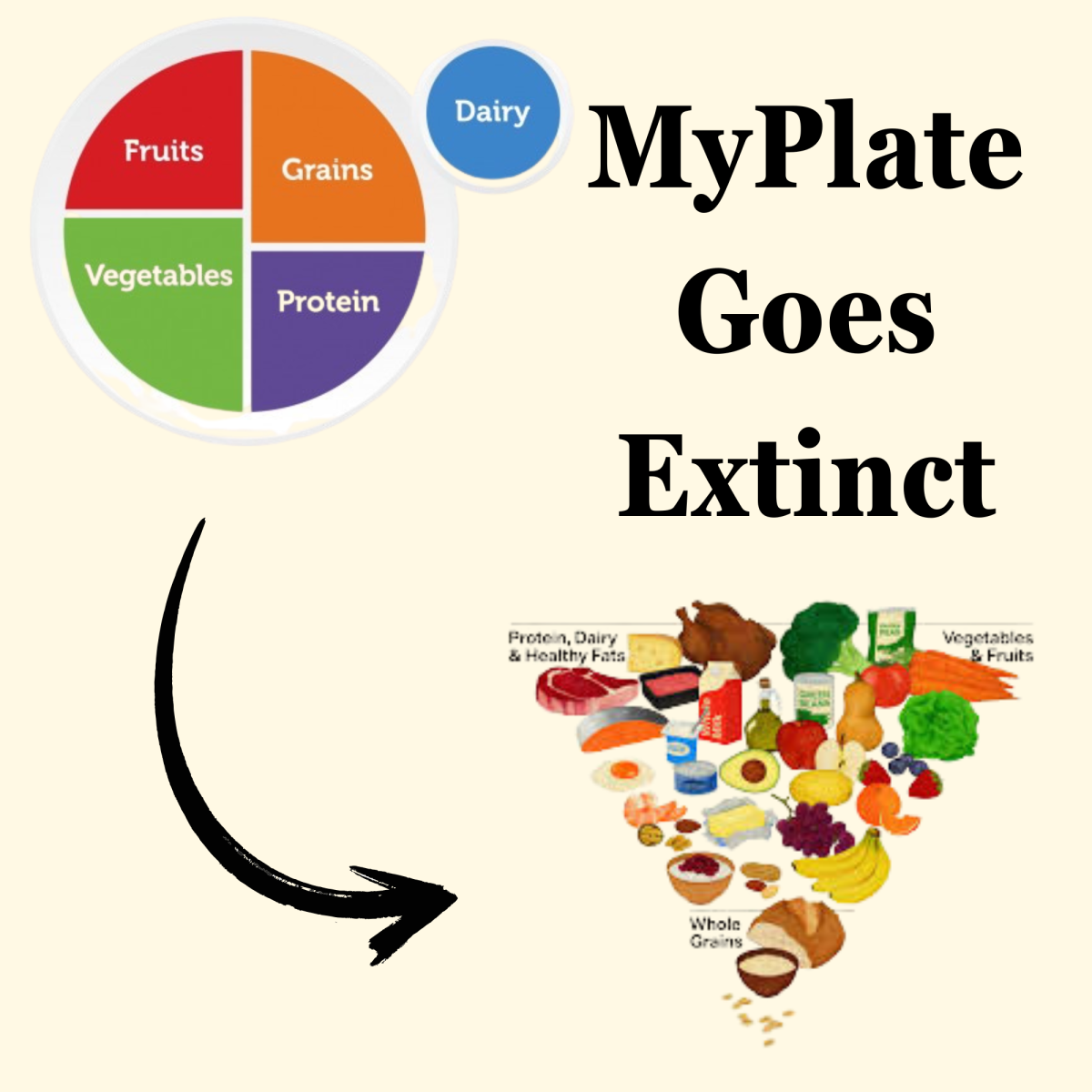
MyPlate has been around for 14 years, after former First Lady Michelle Obama proposed it to the U.S. Department of Agriculture (USDA), and has been the federal government’s primary nutrition guide since January 2026, when the MyPyramid replaced MyPlate after the USDA and the U.S. Department of Health and Human Services wanted to put “real food at the center of health”.
“At long last, we are realigning our food system to support American farmers, ranchers, and companies that grow and produce real food,” Ag Secretary Brooke Rollins said in published reports. “Farmers and ranchers are at the forefront of the solution, and that means more protein, dairy, vegetables, fruits, healthy fats, and whole grains on American dinner tables.”
The new MyPyramid guidelines for 2025 – 2030 now prioritize nutrient-dense foods and encourage the consumption of healthy fats, rather than focusing on portion sizes of different food groups as MyPlate did. The guidelines also feature one clear message: “Eat real food.”
“As little processing as possible is the big focus,” GHS foods teacher Macy Pinion stated.
According to the Centers for Disease Control and Prevention (CDC), America is in a “national health emergency”, with 72.4% of adults 20 and older are either overweight or obese as of August 2021 – August 2023, along with one in three adolescents aged 12-17 having pre-diabetes. Obesity affects 40% of adults and 21% of children across America, which puts them at risk of heart disease, type two diabetes and various types of cancer. The CDC also claims that 90% of the U.S.’s 4.9 trillion in annual health care expenditures go towards people with chronic conditions, which the USDA says is due to diet and lifestyle. Diet-driven chronic diseases disqualify Americans from military services, which can threaten the nation’s readiness when it comes to sudden wars.
“The big difference is going to be the portion sizes, so it’s going from more of a visual aid for kids, so you can see how much your plate should take up of things, to just the focus on eating as close to the original source of the food,” Pinion said.
Realfood.gov states that the average daily diet should consist of 12.5% protein, 12.5% dairy, 15% fruit, 25% vegetables,and 35% grains. Despite that, the average American consumes 23.1% protein, 12.3% dairy, 18.5% fruit, 23.8% vegetables, and 19.7% of grains, with 2.6% N/A (skipped meal). Meaning that the average American consumes 15.3% less grain and 10.6% more protein than what is recommended.