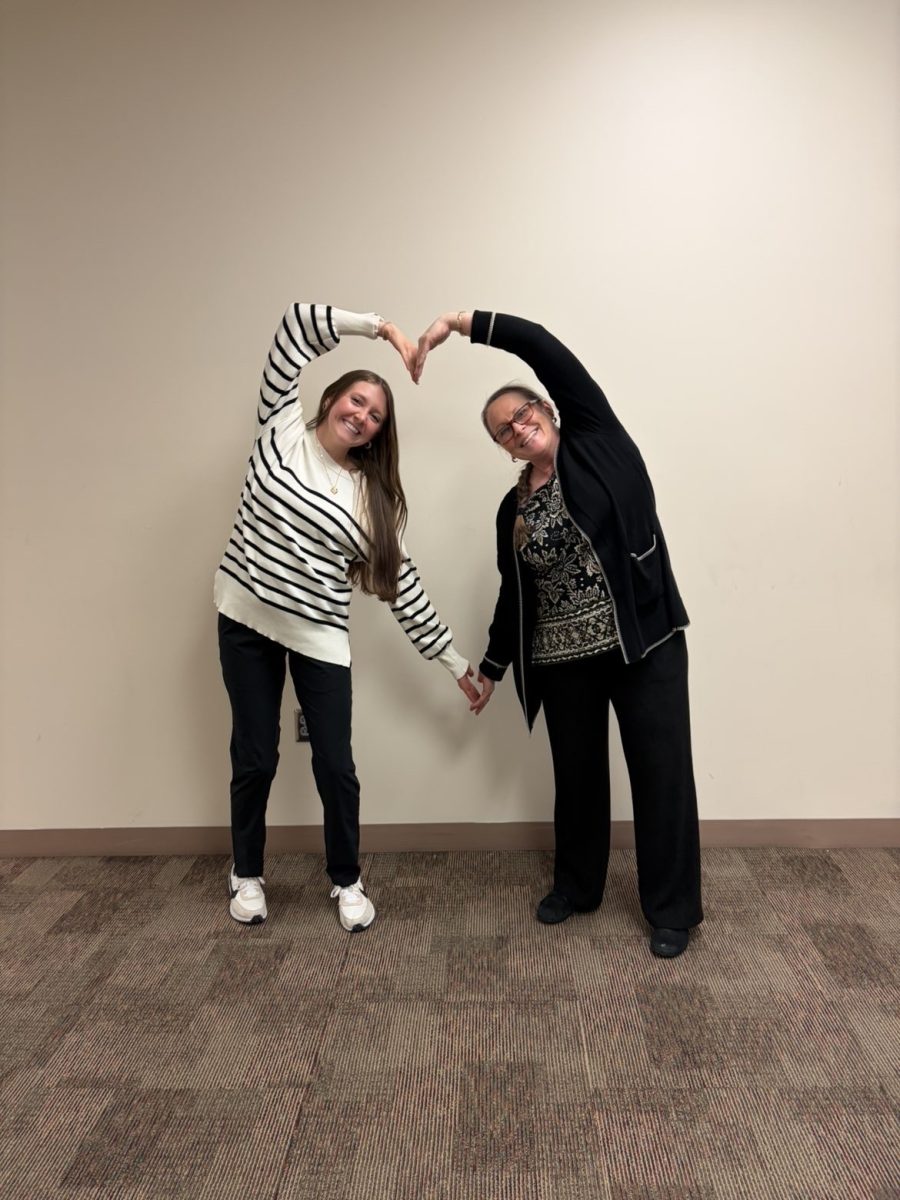
When senior Allison Keasling was growing up, she was told to believe her stomach was her enemy. Countless doctors said to her that she had an illness called celiac disease. After accepting this for almost fifteen years, it was revealed by a gastrointestinal doctor and an endoscopy that Keasling was misdiagnosed.
When Keasling was little, she always complained of stomachaches to her mother, almost every day. After years of going to the nurse’s office, her mom decided to take her to a professional to understand what was happening inside her body.
“When I was just two years old, I started to develop the symptoms of celiac disease,” Keasling said. “It felt like knives were digging into my stomach, and my joints were on fire.”
After a three-year medical mystery and many, many, many different tests, her provider noticed that when testing for celiac disease a panel came up, so they assumed Keasling had celiac disease. Growing up, it was a constant struggle for her to feel included.
“When I was younger, people would try to accommodate too much for me when I didn’t want it,” Keasling said. “For example, my grandma bought me a gluten-free toaster, and that was super embarrassing. Also feeling left out of birthday parties, not being able to eat at restaurants and feeling different from everyone else.”
As Keasling got older, the tests continued and became more rigorous. When she was fifteen, she started taking an iron supplement that ended up making the pain worse. When this happened, they decided it was time to get an endoscopy, which sent a small camera through her body.
“To properly diagnose celiac, an endoscopy has to be performed,” Keasling said. “Mine didn’t happen; instead, I only had blood tests.”
After the procedure was done, it was revealed that fifteen-year-old Keasling was never actually a celiac; she was misdiagnosed her whole life.
“I was super angry and annoyed with everyone, but I was also super happy, though,” Keasling said. “I was able to try all these new foods I never thought I would be able to enjoy.”
After finding out she could eat gluten, Keasling wanted to go to the grocery store to buy gluten-filled food that she could finally try for the first time without pain. She ended up trying a Kit-Kat her mom gave her out of the car.
“It was heaven, it was everything I had dreamed: crunchy, crispy heaven,” Keasling said.
Shortly following the Kit-Kat encounter, she endured a painful six-week trial of gluten with another endoscopy at the end to ensure that she could live the rest of her life without fear of how her body would react to certain foods.
After finding out that she could eat gluten again, Keasling began to feel like she had been faking it her whole life. Additionally, there was the confusion of how someone could misdiagnose something that was so life-changing. With all this, she was undoing a life she had created and lived to keep her safe and out of pain. With this stress came anxiety about the future.
“I had a scare this fall that I would have to go gluten-free again,” Keasling said. “I was super upset because now that I know gluten, it would be way harder to go back to that diet. I honestly just accepted my fate and just blocked it out.”
After being able to do things she never thought she would be able to do, for instance, going to the Taylor Swift Eras tour without pain or fear of eating something that would send her into spiraling pain, she feels good about her future.
“It brought me from the five-year-old girl who cried from pain, the eight-year-old who fought celiac disease, to the 15-year-old who had a major shift in reality,” Keasling said. “Now, it has brought me to a confident 17-year-old who has healed her relationship with food and has found her balance in life.”