In middle school, COVID-19 was at its peak. Having lost a majority of my sixth and seventh-grade years to the confines of my home, I turned to technology. Applications like Amino and Discord became a haven for me; my screen time would often exceed double digits, and as a result, my classwork suffered. Then it got deeper. Suddenly, I was crying every day and struggling to find the will to keep going.
Finally, we went back to school, but the isolation persisted.
I didn’t fit in, I never have. I don’t play sports, nor do I dance, cheer or run. I continued to be isolated, finding myself backed into a corner.
Then, a Juul was slid under the bathroom stall. This single action turned into slipping $20 bills into my boyfriend’s sleeve and receiving a bubble gum-flavored vape into mine. This rush came crumbling down when my mom came into my room unannounced, vapor whisping into the air. I sobbed, everything from the past few years crumbling beneath me as she cradled me into her arms and promised me everything would be okay.
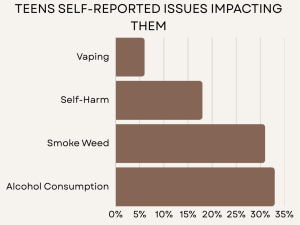
Now, I’m officially three years clean from nicotine. But my story isn’t unique. Here at Gretna High School, more students than I can count share similar stories. In the U.S alone, 5.9% of students vape, 32.9% consume alcohol regularly and 30.7% have smoked weed regularly. All of these addictions normally stem from already-rooted trauma and mental health issues.
Social media only seems to elevate this issue, making these ideas seem “cool” and more normalized. Whole friend groups will be formed based solely on getting high through hangouts.
“Sometimes, unfortunately, that’s what a friendship is built on. So if a student comes to me wishing to stop, they feel like they’re going to lose their friends,” said counselor Shauna Reeves said. “And that’s a terrifying feeling.”
According to an article by the National Library of Medicine, friends are the most common source of vapes; first nicotine products. Most marketing strategies used by nicotine companies leverage socialization through social media. Their bright colors, appealing packaging, and child-friendly flavors invoke a nostalgic feeling in adolescents and teenagers. Vapes are designed to be slicker, easier to hide, and don’t leave the harsh smell cigarettes or cigars do, which makes bringing down the hammer extremely complicated.
“Unfortunately, the law is written for tobacco-based products that we have to actually see them use it,” said Deputy Lance Schikert said. “There’s no law against possession, so some judges say that having that on them is good enough proof they’re using it, but it’s been swinging to the other side now, where we have to actually see smoke come out.”
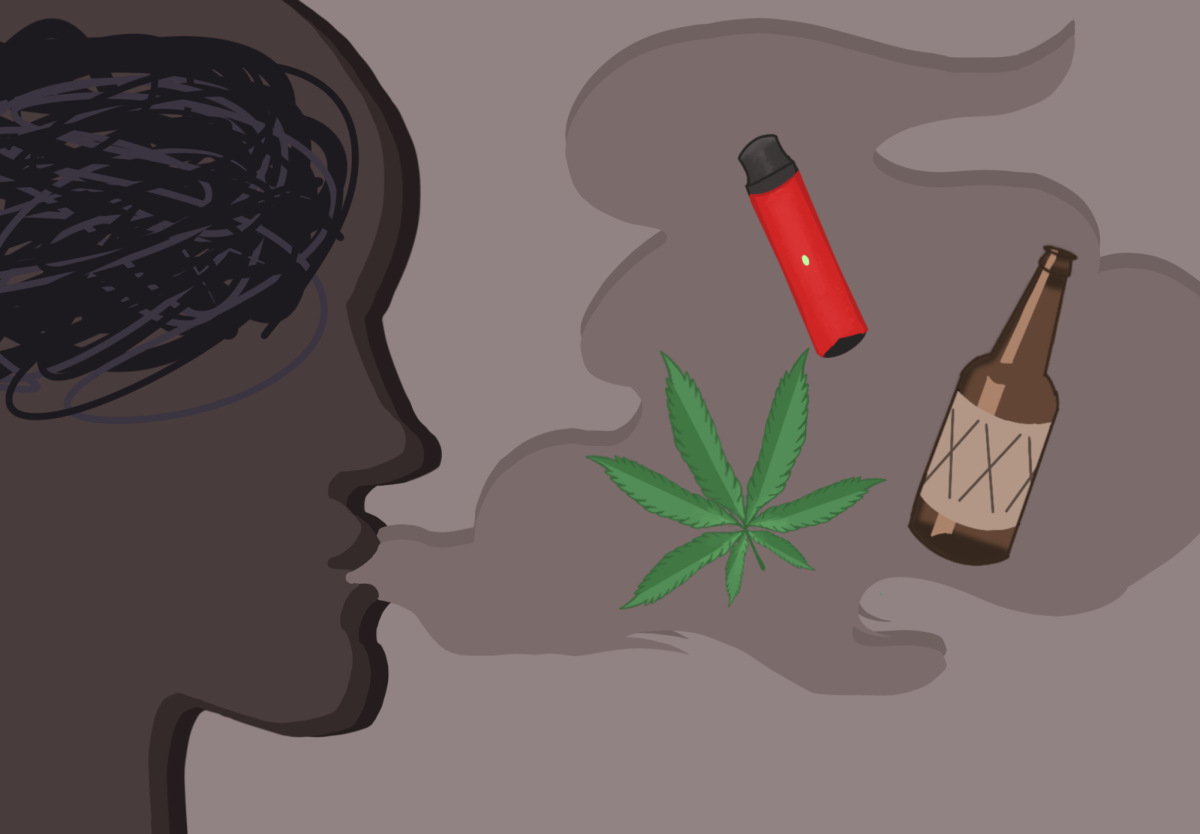
Disposable vapes are especially an issue due to the lack of chemical regulations; some of these disposables contain components that are found in cars (benzene), lawn care products (formaldehyde) and heavy metals like lead, tin, and nickel. These chemicals lead to extreme inflammation, issues breathing and lung scarring, which can impact efficiency in sports or other physical activities.
Graphic by Skylar Miller
“I always tell them about it (popcorn lung) and how it’s not regulated by the USDA, and you don’t know what extra chemical they’re putting in your body to give you those flavors,” said Schickert said. “I try to educate them innovatively on the impact as opposed to nicotine just being dangerous.”
Disposable vapes not only impact our health, but also the health of the environment. In the fiscal year 2024-2025, 180 to 200 million vapes were discarded, which translates to over 500,000 daily. This also contributes to the annual disposal of 30 tons of lithium batteries.
Similarly, cannabis and alcohol consumption also generate significant negative environmental impact numbers. Like vapes, many glass or plastic bottles used for alcohol are improperly disposed of. According to Take Control by OYNB, a study in the United Kingdom found that 50% of all alcohol containers are recyclable, but not all are. Because of the tedious nature of growing cannabis, it’s traditionally grown in warm, sunny regions in remote areas on steep slopes, which increases the likelihood of erosion, stream dewatering and forest clearing. Although due to their small sizes and increased regulation, this concern can be greatly reduced.
That raises an important question: why do people like me persist in this struggle despite the many downsides? It’s a bit like how teenagers sometimes drive recklessly, fully aware of the risks, yet feeling invincible against the statistics. It’s easy to understand how we might cling to hope and resilience even when the odds seem stacked against us, but in reality, that progress is an illusion. A beautiful lie made up by the nicotine in our hands to justify another puff. Eventually, you realize you aren’t driving toward a destination; you’re just keeping your foot on the gas because you’re too terrified to see what happens when the car finally stops.