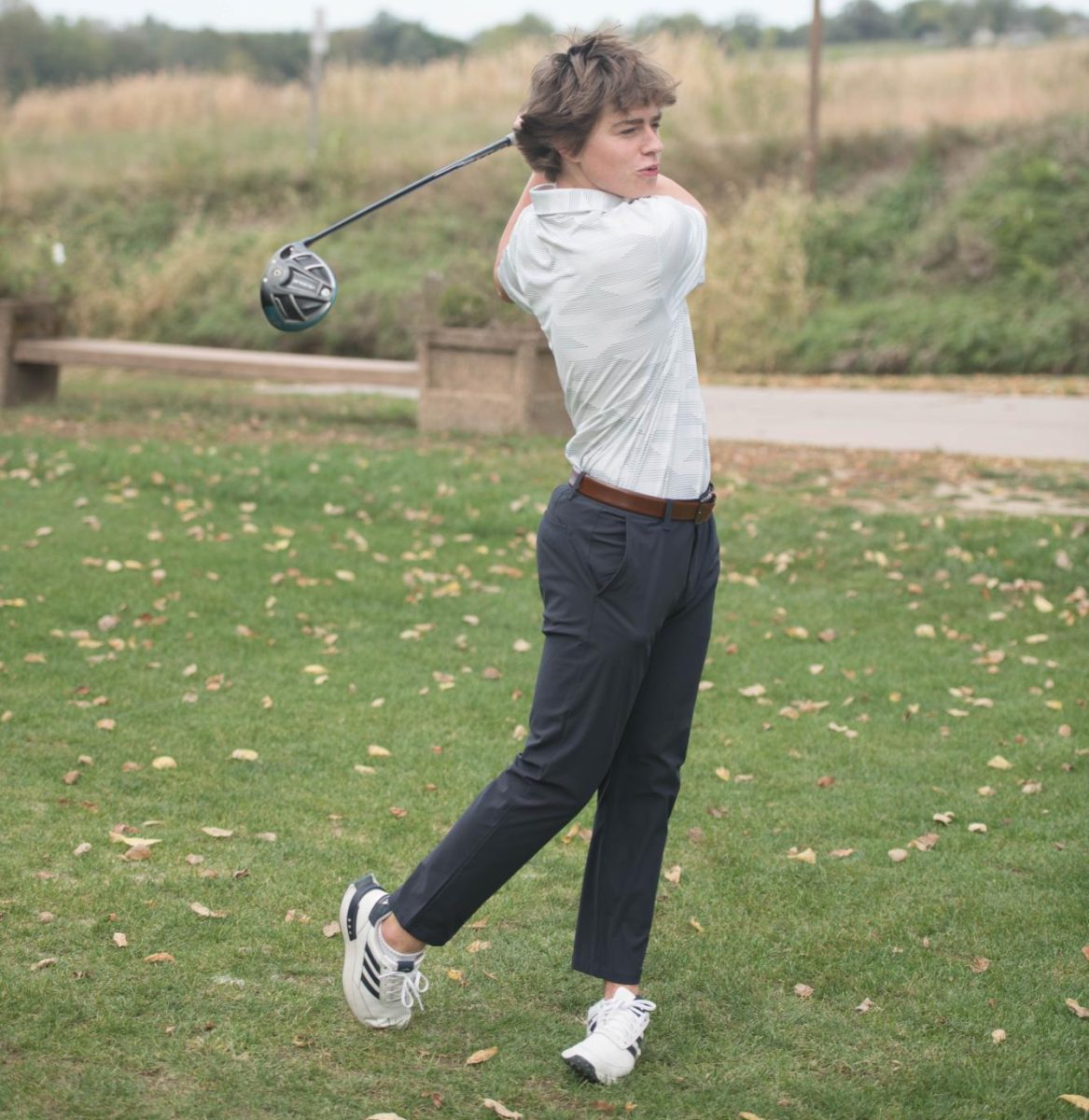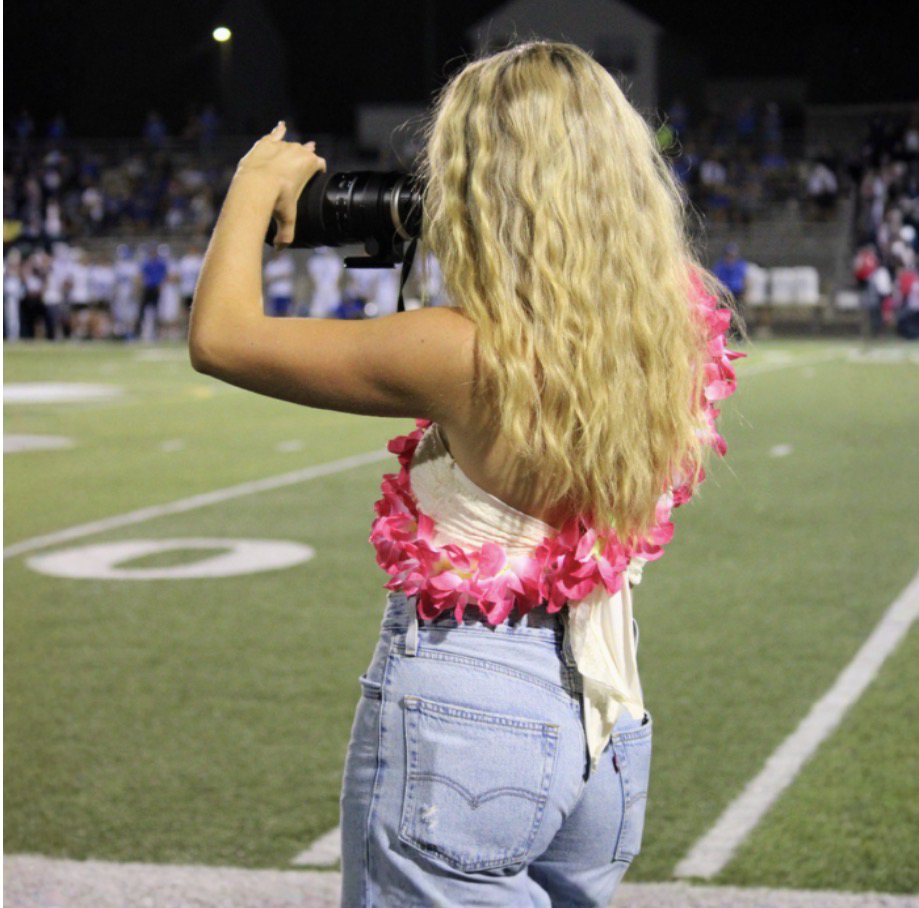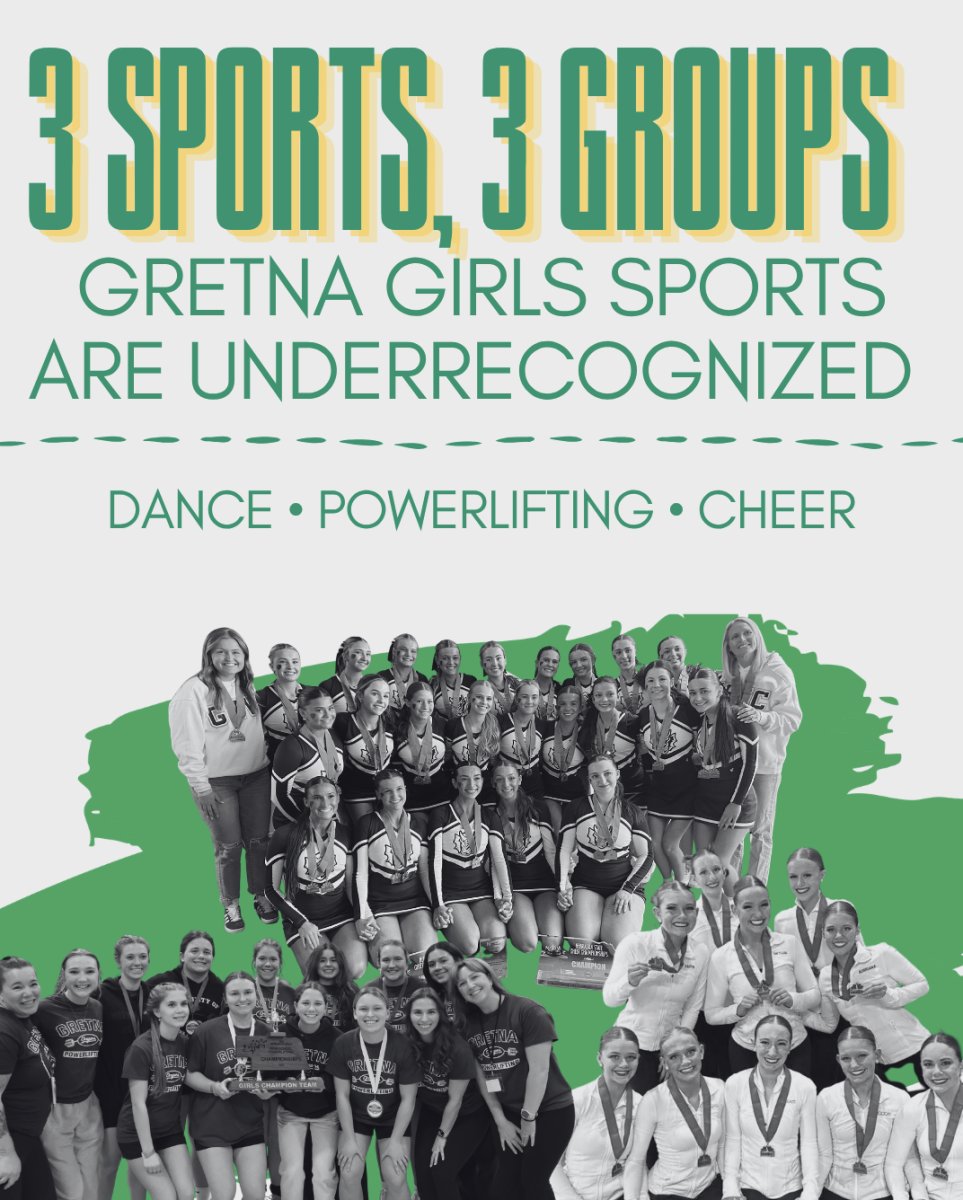
Over the past few weeks, the Gretna High girls sports teams have won four championships across three sports: varsity cheer, varsity dance and powerlifting. Two of those are the first state titles for their sport (girls powerlifting and dance); the only issue is that all of them are not sanctioned by the NSAA. With the fight still ongoing, will any of these ever become part of the ebraska School Activities Association? Additionally, Gretna does a less than great job recognizing women’s sports in general and sports that are “clubs.” Note: Powerlifting at GHS includes both male and female athletes. The girls team won Nebraska State Powerlifting title this spring.
Many coaches are constantly looking for ways to be supported: cheering with youth cheer groups to raise funds, running small fundraisers, hosting youth dance camps or even hosting a meets every year. A lot of this effort goes unnoticed in school districts. One way all teams have generated support is through the media, especially in powerlifting,
“I think our sport is a really niche sport,” Pape said. “So, unless you compete in powerlifting yourself, you’ve probably never heard of it, don’t understand it or what it is. I think if it received any coverage, an explanation of how you arrive at a total or how you compete would be very helpful. Because in a lot of ways, it’s similar to other, you know, NSAA sports, but we’re just not one. So we don’t really get much attention at all.”
With this, the media play a huge role in helping these ‘‘smaller’’ teams, all of which use social media to grow their platforms and teams.
In addition to dance and cheer, powerlifting also uses social media to engage and create an atmosphere for younger candidates. The head coach of the dance team, Marlando Sparks, uses different ways to help people see the hard work these athletes put in,
“One of my priorities has been helping people see that our dance team is a competitive athletic program, not just halftime entertainment,” Sparks said. “We try to stay visible in the community by performing at school events, participating in local parades and collaborating with local dance studios so younger dancers feel connected to our program.”
Cheer uses its youth cheer program and camps to raise money and awareness for its team.
“Our cheerleaders also are the coaches for the Gretna Youth Cheer program (GYSF), so that helps get younger cheerleaders excited for high school and exposes our cheerleaders to youth who look up to them, which is amazing,” head coach, Zoe Chagnon said. “Additionally, since we cheer at football, basketball and volleyball games, we are frequently seen in the community.”
Athletes in these programs put in countless hours of hard work and sweat to earn this recognition, which is well deserved. Powerlifting and dance brought home first-ever state titles in Gretna’s history, and cheer brought back their third and fourth state titles. It left many students feeling unsupported and unrecognized by the school and community.
“I’d say that it’s… It’s not very rewarding,” senior powerlifter Sydney Malone said. “I mean, personally, I feel rewarded by it, but not getting the recognition kind of feels like we’re less important than other sports, and it just sucks sometimes.”
When moving into Dance, many people say it is an extracurricular activity.
“I would define it as any other sport,” senior dancer Brooke Hamele said. “We do the same amount of work. We have the same amount of passion. We just don’t get recognized as much.”
All three head coaches believe that the media is the biggest part of their programs. With cheer, many documentaries and social media, especially the popular app TikTok, has played a big role in promoting popularity within the sport.
“The Netflix series ‘Cheer’ highlighted the intense training, dedication and competitiveness involved in the sport, helping people see it as more than just sideline cheering,” Chagnon said. “Social media has also helped, like how UCA/UDA College Nationals is sometimes called the ‘TikTok Super Bowl’ because routines spread quickly online and reach huge audiences. On a local level, media, like, Instagram can help grow specific programs.”
The teams turned to Instagram for more community awareness by showing how the athletes perform, the results of competitions, and even behind-the-scenes videos. However, powerlifting head coach Alise Pape said she still believes that word of mouth can spread information and also generate more attention to the forgotten teams.
“When Gretna Media highlights competition results, athlete achievements and the training behind performances, it helps shift the narrative from ‘just dance’ to recognizing it as a demanding athletic discipline,” Sparks said. “When the media treats dance teams the same way they cover other athletic programs, it validates the hard work these athletes put in and helps grow interest in the sport.”
This past year, Gretna High Dance Team also took home their first national title in small Dll gameday. These athletes also have such high-intense training throughout the week that tends to go unnoticed. Cheer and dance is a year-long sport, while powerlifting is a winter sport that tends to be forgotten about.
“The week of a cheerleader is crazy and takes so much heart and dedication,” Chagnon said. “It depends on the time of year, but we are a year-round sport that never stops. In the summer, we have three practices a week, tumbling twice a week and strength training twice a week. We then move into choreography and the beginning of the school year, where we cheer for football on Fridays, cheer for volleyball during the week, practice about three times a week and coach the youth cheerleaders as well. During competition season, we are cheering at basketball games, practicing about three to four times a week, and competing on the weekends. After competition season, we get about a week off, and then we start with tryouts.”
Without a break for cheerleading, powerlifting also has heavy weeks,
“A typical week of training for my athletes looks like three different workouts intentionally designed to build strength in the big three lifts,” Pape said. “So in a powerlifting competition, your total is based on your combined weight moved on your squat, your bench, and your deadlift. So Monday, Wednesday and Friday, we train squat, bench and deadlift. We have kids who are here till five or six p.m., Monday, Wednesday, and Fridays, lifting with us because when you are moving so much weight, it does take quite a bit of time to do that entire workout.”
When working on different sports, everyone has their own schedule and practice regimen
“Our athletes typically practice multiple days a week,” Sparks said. “A typical practice might include a full warm-up, lots of conditioning, learning or cleaning choreography, and then running full routines repeatedly to build stamina. On top of that, many of our dancers are also balancing schoolwork, work, other activities, and even outside dance training.”
Without getting recognized as much, these students gather a huge sense of community and family culture through their teams.
“We’re all really close, especially because it’s smaller, and a lot of people don’t really, like, know about it,” Malone said. “It’s just that we are all really good friends. We’ve been training together for years now, and it’s just a really tight-knit community.”
When it comes to community they need all the support they con get being all funded on there own,
“Not getting the support from everybody can definitely bring you down,” Hamele said. “And so it’s important to have that support system within your team, to make sure that we’re all doing good, and that even though we don’t get the recognition that I believe we deserve. We’re all so proud of each other.”
The ups and downs of not having the support of the other teams can be stressful and hard on anybody, but especially these teams looking for the recognition they have deserved for years.