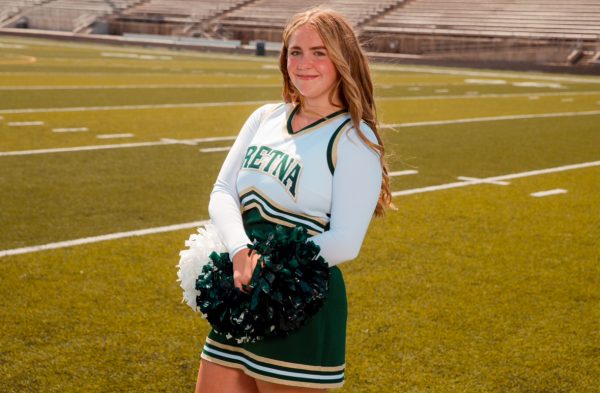
“As for cheer, you will be out for about four to six weeks.” Those words had ripped away something that had become a piece of me. The rest of my cheer season was over. No more practices. No more sidelines. Worst of all, there would be no competition season.
I left the doctor’s office with a note and so many uncertain aspects of my future. When would I be without pain? When would I be able to cheer again? Would I need surgery? I had a serious back injury for the second time.
Two years prior, I had a small fracture in my spine that prevented me from cheering over the summer. While I was extremely upset, I made a speedy recovery and was cleared to cheer by football season.
This time, though, was quite different. I had what was most likely a muscle or disc injury in my lower back; there is no fast, easy solution to my problem. The prescription was rest, physical therapy and, most importantly, keeping a good mental outlook.
The hardest part of a back injury is that you can’t see the progress you are making. If you have a broken ankle, you can see the bruising start to go away or the swelling go down. With a back injury, you just have to hope that it’s getting better.
No one could truly see what I was dealing with, while some of my teammates tried their hardest to help me feel better, I felt like my world was collapsing around me.
There were times before my injury that I had complained about not wanting to go to a practice or that wearing my uniform felt like a chore. I never truly realized the privilege that it was to be able to participate in something bigger than myself.
Going to the first practice where I couldn’t do anything broke my heart. The hardest part was watching my spot in the routine be filled. It felt like I was easily replaceable. I longed for the feeling of the mat under my feet and my fingers gripping onto my poms.
Reflecting on it now, I realize that no one will ever be able to fill my shoes exactly right. It was important for me to understand that even if a spot in our routine could be changed easily, the presence that I bring to the mat could not. I went home that night with a heavy heart; that was when I realized that if I didn’t change my mindset, I was going to drive myself insane.
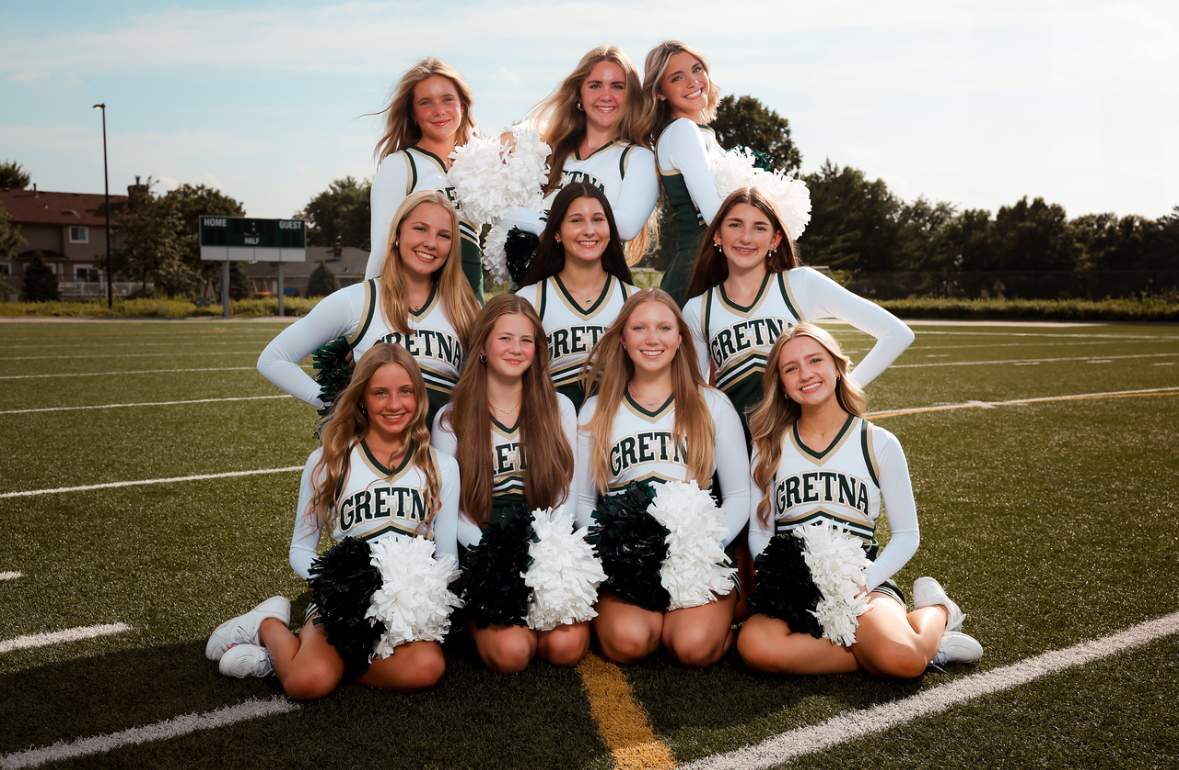
If I couldn’t help my team by being on the mat, the next best option was being their biggest cheerleader off the mat. I plan to spend the next weeks encouraging them to be the best that they can possibly be. My team is one of the strongest groups of girls out there. At times, we do not always get along, but at the end of the day, we all realize we are one team with one main goal.
Being a part of the team means so much to me. I get to spend time with my best friends, cheer for a school I am proud to be a part of, and push myself out of my comfort zone.
Instead of feeling like there was nothing I could do if I was not on the mat, I started focusing on the things that I could do for my team on the side.
Throughout my whole experience, I learned that the most important thing you can do when life throws you a curveball is not to get down on yourself. Things happen that are out of our control, and, when they are happening, it feels like the world is ending. No matter what it is that you are dealing with, keep your head up high and remember that when one door closes, another one is sure to open.
The doctor’s sentence—”you’ll be out for four to six weeks”—felt like the end. Instead, it became the start of a lesson about patience, resilience and the irreplaceable power of presence, on the mat and in life.